Northern Institute
Journey through China’s Loess Plateau
| Presenter | Dr David Karacsonyi | |
|---|---|---|
| Date/Time |
to
|
|
| Contact person |
Northern Institute
|
|
| Location | Northern Institute, Savanna Room (Casuarina Campus, Building Yellow 1, Level 2, Room 48) | |
| Open to | Public | |
About
China’s Loess Plateau is a specific geographic region for many reasons. Severe soil erosion, frequent droughts, desertification and dust storms characterise this historically poor and marginal region. Yet, it also holds significance for China’s current political identity. In presenting my recent journey through the Loess Plateau, I will draw parallels with Australia’s ‘North’. Like Australia’s ‘North’, the Loess Plateau has long been a geographic arena where people have struggled against environmental challenges.
Additionally, the Loess Plateau serves as a showcase for targeted development policies aimed at alleviating rural poverty and overcoming environmental limitations. Both large-scale, externally driven infrastructure investments and smaller, localised initiatives are set to demonstrate the strength and success of China’s current political system. Insights from this journey may also offer a better understanding of the impacts of resource extraction and large-scale external investments in Australia’s Northern Territory.

Presenter
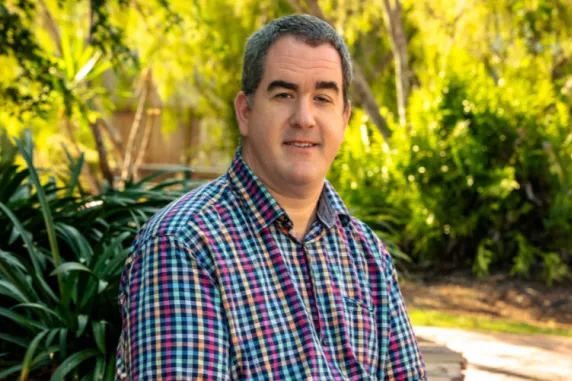
Dr Dávid Karácsonyi is a geographer, GIS analyst, atlas cartographer, map designer and an enthusiastic scientific blogger. David works with the Demography and Growth Planning Team at the Northern Institute to better understand population change in the Northern Territory. He was recently a visiting researcher at the Chinese Academy of Sciences (Beijing), where the Institute of Geographic Sciences and Natural Resources Research has a long history of studying the Loess Plateau.
Have questions about this research? Contact David at:
Registration
In-person: Please RSVP here to attend in person—limited seating (30ppl).
Online: Once you register, you will receive an individual link from Zoom no-reply@zoom.us.
Each seminar is recorded and linked to our Seminars page.
Getting there
Savanna Room @ Northern Institute
CDU Casuarina Campus
Yellow Building 1, Level 2, Room 48
Google Maps location or How to get to Savanna Room.
Access: If you have any additional access or support requirements, please contact us. The Savanna Room is accessible using a lift or one flight of stairs through an automatic door. There is a wheelchair-accessible bathroom on Level 2 and a baby change room on Level 1 (ground floor).
